🌸 Spring Break Camp | April 6 – April 10 🔬 Beakers, Boats, and Botany. Click the triangle to read more about the day to day adventures planned as well as a separate button to register for SPRING BREAK.
🔬 Beakers, Boats, and Botany
A “Mad Scientist” Science Lab Preview Week!
Get ready to explore exciting scientific concepts as we preview our hot summer camp week “Mad Scientist” with our hands-on “Beakers, Boats, and Botany” Science Lab sessions!
👧🧒 For Children Ages 3–12
Campers are grouped by age to ensure developmentally appropriate learning:
- PreK–2nd Grade
- 3rd–6th Grade
Throughout the week, campers will also participate in our intentional and balanced Cross-Age Buddy Groups, building mentorship, leadership, and connection across ages.
Using the Children’s Museum as our classroom, this week blends curiosity, creativity, and collaboration—turning big chemistry ideas into unforgettable fun!
🧠 What Children Will Learn
🐡🧪 How density affects buoyancy and why different materials float or sink
💥🧪 How substances change during chemical reactions
🧊💧🫠 The differences between solids, liquids, and non-Newtonian fluids
🧬🔄 How mixing ingredients creates new properties
💎⏳ How crystals form over time
🧑🔬👀🛡️ How scientists test, observe, record, and safely explore reactions
Experiments and discussions are thoughtfully adapted so each age group learns at the right level—while still sharing exciting discoveries together.
🔍 Daily Experiment Line-Up
🚢 Monday: Density & Buoyancy
- Build-a-Foil Boat Challenge
- Will It Float, Sink, or “Flink”?
- The Magical Floating (or Sinking!) Orange
💥 Tuesday: Chemical Reactions in Action
- Elephant Toothpaste
- Iodine Clock Reaction
- Cold Air Balloon Experiment
🌱 Wednesday: Botany & Plant Science
- Celery Rainbow
- Leaf Under Water Investigation
- Glowing Spinach
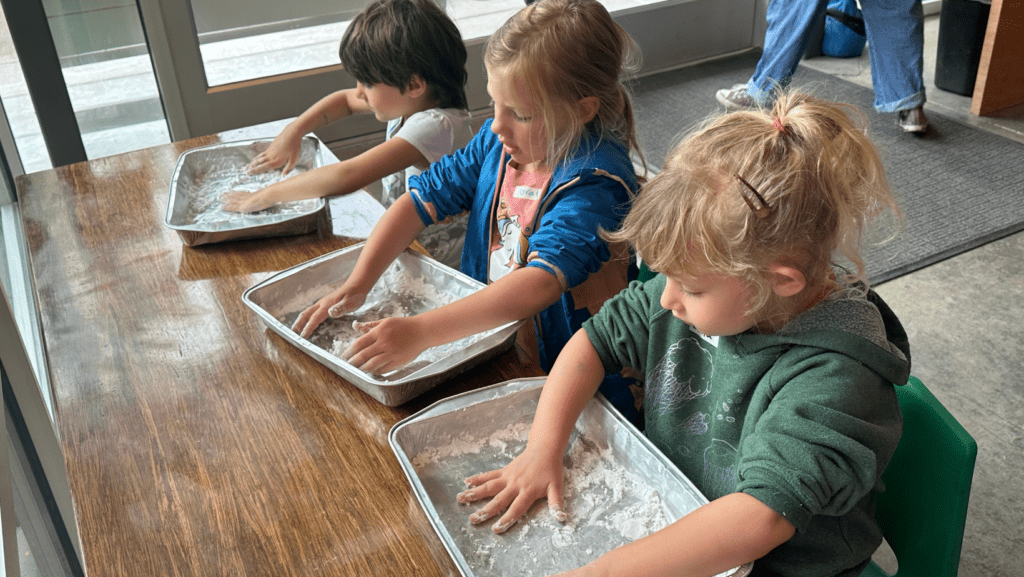
🧪 Thursday: Non-Newtonian Fun
- Oobleck
- Slime Lab
- Silly Putty Science
🌋 Friday: Colorful Chemical Reactions
- Magic Milk
- Baking Soda Volcano
- Homemade Lava Lamp
🧠 Skills Woven Throughout the Week
Beyond science experiments, campers build lifelong skills every single day:
✨ Social-Emotional Learning through teamwork and leadership
🔍 STEAM Thinking — questioning, testing, problem-solving
🎨 Creativity through art, storytelling, and design
🎤 Confidence-Building through sharing ideas and discoveries
📚 Learning by Age Group with developmentally tailored instruction
🤝 Cross-Age Buddy System (Intentional & Balanced)
Our structured buddy system pairs younger and older campers for select activities to create meaningful mentorship opportunities.
🧠 Skills Built Through Buddying
❤️ Empathy & responsibility
🗣️ Leadership & communication
🌟 Confidence for younger campers
🏡 A strong sense of community — like one big camp family
KiDiMu 2026 Summer Camps
Camps are for ages 3-12.
Campers must be potty trained.
Camps will run from 9am-3pm at the museum.
KiDiMu Team
All Summer Camps Include:
- 🧪 Hands-On Science Experiments (where curiosity is always the right reaction)
- 🎨 Creative Art & Design Projects (mixing imagination with a splash of color)
- ✂️ Fine Motor Fun (small moves, big brain power)
- 🏃 Gross Motor Games & Outdoor Play (putting the force in fun!)
- 💛 Social & Emotional Learning (building friendships that really count)
- 📖 Storytime & Mid-Day Rest (time to recharge those batteries)
- 🍎 AM & PM Snacks + Lunch (fueling growing thinkers and explorers)
- 🔢 Math Games & Puzzles (adding up the fun and multiplying the smiles)
- 🧠 STEAM Challenges (experimenting, predicting, and testing ideas)
- 🌍 Critical Thinking & Problem Solving (because great minds love a good challenge)
- 🎯 Logic, Strategy & Team Games (where every move is a smart calculation)
Camp Pricing
Spring & Summer 2026
COST
$112.50/day for members
$125/day for non-members
$525/week for non-members $472.50/week for members
$350/half day (9am-12pm or 12pm-3pm) for non-members $325/half day (9am-12pm or 12pm-3pm) for members *these prices are for the week
Need early drop off at 8am or late pick up at 4pm? $20/hr
HOURS
Monday-Friday, 9:00AM-3:00PM
Fridays are family celebrations each week!
AGES
3-12
Multi-Age Community Experience
We offer opportunities for mixed-age groups including PreK–2nd and 3rd–6th (ages 3–12). These groupings allow older children to grow as leaders, helpers, and role models, while still enjoying dedicated time and activities with peers their own age. Younger campers benefit from learning alongside older friends, creating a supportive environment that feels like one big family—where everyone belongs, learns, and grows together in the coolest classroom in all of Kitsap County!
REGISTRATION OPEN NOW!!!
June 15-19 🦖 Dino Discovery Lab
Stomp, Chomp & Fossil Fun!
Step back in time as campers become junior paleontologists! Using the children’s museum as our classroom—and with a special visit visitor—kids will dig into the fascinating world of dinosaurs through hands-on science, creativity, and teamwork.
🧠 What Campers Will Explore
🪨🦴 What fossils are and how they form
🦖📛 Dinosaur names and how scientists identify them
👣🔍 Footprints and trackways (what prints can tell us!)
🌿🍖 Herbivores vs. carnivores—who ate what and why
🦴🦕 Dinosaur bones and skeletons
🔍🧠 How scientists study the past using clues and evidence
🦖 Dino Discovery Lab: Stomp, Chomp & Fossil Fun!
Week 1 | June 15–June 19
Daily Themes & Learning Adventures
🪨 Monday – Dig Day
What is a fossil?
- Excavation stations and “fossil digs”
- Discover how fossils form and why they’re important
- Compare real vs. replica fossils
- PreK–2nd: sensory digs, simple fossil matching
- 3rd–6th: fossil formation experiments & evidence discussions
🦴 Tuesday – Bone Builders
What can bones tell us?
- Explore dinosaur skeletons and body structures
- Build full and partial dinosaur skeletons
- Learn how paleontologists identify dinosaurs by bones
- PreK–2nd: large-scale bone puzzles & body movement games
- 3rd–6th: skeletal comparisons & function-based reasoning
👣 Wednesday – Track & Trace Day
Follow the footprints!
- Study dinosaur tracks and what they reveal
- Measure, compare, and create footprint casts
- Connect prints to size, speed, and diet
- PreK–2nd: footprint art & movement matching
- 3rd–6th: math-based track analysis & prediction challenges
🌿🍖 Thursday – Dino Diets
Herbivores vs. carnivores
- Explore teeth, jaws, and food chains
- Sort dinosaurs by diet
- Hands-on games modeling how dinos ate
- PreK–2nd: diet sorting games & role-play
- 3rd–6th: adaptations, ecosystems & energy flow
🏛️ Friday – Museum Scientist Day
Meet the experts!
Celebrate the week with a Dino Discovery Showcase
Special Museum visitor experience
Learn how real scientists study dinosaurs today
Practice being museum scientists and educators
Share discoveries through presentations, art, or displays
🧠 Skills Woven Throughout the Week
- Social-emotional learning through teamwork & leadership
- STEAM thinking: questioning, testing, and problem-solving
- Creativity through art, storytelling, and design
- Confidence-building through sharing ideas and discoveries
🧠 Learning by Age Group
PreK–2nd Grade (Ages 3–7):
Young campers will explore dinosaurs through play, movement, and imagination:
- Dig for “fossils” and match bones to simple skeletons
- Compare dinosaur footprints and make their own prints
- Learn basic dinosaur groups (plant-eaters vs. meat-eaters)
- Practice new vocabulary through stories, songs, and art
- Build social skills by working together and taking turns like real scientists
Skills Built: curiosity, observation, fine & gross motor skills, early science concepts, social-emotional growth
3rd–6th Grade (Ages 8–12):
Older campers will go deeper into scientific thinking and investigation:
- Classify dinosaurs by diet, body structure, and adaptations
- Analyze fossil evidence and footprints to make predictions
- Learn how paleontologists name and identify species
- Reconstruct skeletons and explore how bones show movement
- Practice teamwork, leadership, and mentoring younger campers
Skills Built: critical thinking, STEAM skills, collaboration, leadership, scientific reasoning
🦴 Special Experience
A special visitor will bring real-world science to life, connecting campers with authentic museum research and the work of professional paleontologists.
🦖 Dino Discovery Lab: Stomp, Chomp & Fossil Fun!
Daily Schedule (Applies to All 5 Days)
⏰ Daily Schedule by Block
8:30–9:00 | Arrival & Discovery Stations
- Open-ended museum explorations (fossils, blocks, art, books)
- Cross-Age Buddies: Older campers welcome younger buddies, model routines, and help choose stations
9:00–9:30 | Morning Circle & Theme Launch
- Introduce the daily theme (Dig Day, Bone Builders, etc.)
- Story, visuals, and movement
- Social-emotional focus: kindness, teamwork, listening
- Cross-Age Buddies: Older campers help demonstrate movements or vocabulary
9:30–10:30 | STEAM Exploration Block
Hands-on investigations tied to the daily theme
- Fossil digs, skeleton builds, footprint experiments, diet challenges
- Cross-Age Buddy Activity:
- PreK–2nd explore with guidance
- 3rd–6th act as Junior Scientists, helping ask questions, record observations, and explain ideas
10:30–10:45 | AM Snack & Reset
- Snack, hydration, bathroom break
- Quiet social time
- Cross-Age Buddies: Table helpers & conversation starters
10:45–11:30 | Choice Labs (Age-Specific)
- PreK–2nd: sensory play, art, stories, movement
- 3rd–6th: deeper science labs, challenges, design builds
- Gives older campers dedicated peer time
11:30–12:15 | Gross Motor & Dino Motion
- Outdoor play or large-space movement
- Dino walks, predator/prey tag, bone relay races
- Cross-Age Buddies: Team games that pair ages for cooperation
12:15–12:45 | Lunch
- Community-style seating
- SEL focus: manners, conversation, inclusion
- Cross-Age Buddies: Older campers model leadership and kindness
12:45–1:30 | Storytime & Mid-Day Rest
- Dino stories, quiet music, drawing or journaling
- PreK–2nd: rest/quiet bodies
- 3rd–6th: reflection journals, reading, or sketching fossils
1:30–2:15 | Creative Expression Block
- Art, building, storytelling tied to the daily theme
- Dioramas, fossil rubbings, museum labels
- Cross-Age Buddy Activity: Create shared projects (exhibit signs, models)
2:15–2:30 | PM Snack
- Fuel up and reset
2:30–3:00 | Closing Circle & Reflection
- Share discoveries
- What did we learn? What surprised us?
- Leadership shout-outs for helpers and teamwork
🤝 Cross-Age Buddy System (Intentional & Balanced)
How It Works:
- Campers are paired in small mixed-age groups
- Older campers rotate roles: helper, reader, builder, explainer
- Younger campers gain confidence and language skills
- Older campers build leadership without “babysitting”
Buddy Activities Include:
- Fossil digs & skeleton builds
- Footprint measuring & tracing
- Museum exhibit creation
- Movement games & challenges
- Friday Discovery Showcase presentations
🧠 Skills Built Through Buddying
- Empathy & responsibility
- Leadership & communication
- Confidence for younger campers
- Community connection—like one big family
🎉 Friday Dino Discovery Showcase Plan
Friday | Museum Scientist Day
Purpose:
Celebrate learning, build confidence, and let campers share discoveries with families and peers.
🕑 Showcase Flow (45–60 minutes)
- Welcome Circle (5–10 min)
- Camp leaders introduce the week’s theme
- Campers share: “I was a paleontologist this week!”
- Exhibit Walk-Through (20–30 min)
Campers present:- Fossil dig displays
- Skeleton builds
- Footprint casts & measurements
- Dino diet charts
- Art, dioramas, and museum labels
Cross-Age Buddies: Older campers help explain exhibits; younger campers share favorite facts.
- Special Highlight (10 min)
- Reflection on special Museum visitor
- “Ask a Scientist” Q&A or camper-led fun facts
- Closing Celebration (5–10 min)
- Certificates: Junior Paleontologist
- Group photo & applause
June 22-26 🌱 Farm to Table Lab
Plant It • Grow It • Cook It • Share It!
At Farm to Table Lab, campers become young farmers, gardeners, and chefs, exploring where food comes from and how it gets from the soil to our plates. Using hands-on science, cooking, creativity, and teamwork—and with a special visit from a real working farmer and a local chef—children discover the full food journey: planting, growing, harvesting, cooking, serving, and eating.
This week blends life science, nutrition, math, and social-emotional learning, all inside the coolest classroom ever—the children’s museum and the real world beyond it.
🧠 What Campers Will Learn
🤝💛 The importance of sharing, gratitude, and community
🌱💧 How plants grow and what they need to survive
🚜➡️🍽️ The farm-to-table food cycle
🌎🥕 Where different foods come from
👩🍳🔪 Basic cooking and food preparation skills
🌱 Daily Themes
- Monday – Seed Day 🌰
Plant seeds, explore soil, and learn what plants need to grow - Tuesday – Grow Day 🌱
Discover plant life cycles, sunlight, water, and care - Wednesday – Harvest Day 🥕
Learn when and how food is harvested and prepared - Thursday – Cook Day 👩🍳
Practice safe food prep, simple recipes, and kitchen math - Friday – Share Day 🤝
- Reflect on learning, prepare food together, and celebrate community
🎉 Friday Farm Feast Showcase
Families are invited to our Farm Feast Showcase, where campers celebrate the week’s learning.
Showcase Includes:
- Displays of plant journals, art, and farm-to-table diagrams
- Camper-led explanations of what they learned
- Shared tasting experience (simple prepared foods)
- Reflections on gratitude, teamwork, and healthy choices
Older campers help present and explain, while younger campers proudly share their work—building confidence for all.
📚 Standards Alignment (Nutrition & Science)
This camp aligns naturally with early learning, elementary science, and health standards, including:
Science
- Plant life cycles and needs (NGSS K–2, 3–5 LS1)
- Ecosystems and human impact
- Observation, questioning, and evidence-based thinking
Health & Nutrition
- Understanding where food comes from
- Making healthy food choices
- Basic food preparation and safety
- Community, sharing, and responsibility around food
Social-Emotional Learning
- Cooperation and communication
- Leadership and empathy
- Gratitude and community connection
🌱 Farm Feast Showcase Details
Date: Friday, June 26
🍎 What to Expect
- Camper-created displays and artwork
- Explanations of the farm-to-table process
- Simple food tastings prepared with care
- Opportunities to see cross-age teamwork in action
- A celebration of gratitude, community, and learning
Older campers will help present and explain activities, while younger campers share their discoveries—making this a meaningful, confidence-building experience for all.
👧👦 Learning by Age Group
PreK–2nd Grade
(Ages 3–7)Younger campers explore climate concepts through play, sensory learning, and movement:
- Create rain clouds and simple weather tools
- Explore wind, water, and ice through hands-on experiments
- Build edible “Earth” and greenhouse gas models
- Learn simple ways to help the planet (turn off lights, reuse, recycle)
- Practice sharing ideas, listening, and teamwork
Focus: curiosity, cause-and-effect, vocabulary building, and social-emotional growth
3rd–6th Grade (Ages 8–12)
Older campers dive deeper into investigation, data, and leadership:
- Build and use a working weather station
- Analyze weather patterns and extreme events
- Model greenhouse gases and climate change impacts
- Test melting icebergs and sea level rise
- Explore air pollution and design ways to reduce carbon footprints
- Support younger campers as helpers and role models
Focus: critical thinking, STEAM skills, responsibility, and leadership
🤝 Whole-Group Learning: Climate Team Days
At key points each day, campers come together as one climate team to:
- Run large-scale experiments (weather simulations, ice melt demos)
- Build shared models and exhibits
- Discuss how climate affects people, animals, and communities
- Practice collaboration and empathy across ages
Older campers help explain concepts, record observations, and guide activities, while younger campers contribute ideas and questions—creating a big-family learning experience.
🌱 Empowering Earth Helpers
Throughout the week, campers learn that small actions matter. By the end of camp, every child leaves with age-appropriate tools and confidence to care for the planet.
Absolutely—here’s a ready-to-drop-in section for Week 3: Climate Explorers Lab, with daily themes, standards alignment, and a family-facing Friday showcase.
🌦️ Daily Themes
Monday – Weather Watch 🌡️
Campers become meteorologists as they:
- Build and use a weather station
- Measure temperature, wind, and precipitation
- Track daily weather patterns
- Compare observations across age groups
Tuesday – Storm Science 🌪️
What makes storms powerful?
- Create rain clouds and storm models
- Explore wind, pressure, and rotation
- Investigate tornadoes and extreme weather
- Practice safety and preparedness
Wednesday – Ice & Oceans 🧊🌊
What happens when ice melts?
- Test melting icebergs and rising water levels
- Learn how ice affects oceans, animals, and habitats
- Explore cause-and-effect through experiments
- Connect climate change to real-world ecosystems
Thursday – Clean Air Day 🚗💨
How does air quality affect our planet?
- Learn what air pollution is and where it comes from
- Model greenhouse gases (including edible models!)
- Explore how pollution impacts health and climate
- Brainstorm ways to reduce our carbon footprint
Friday – Climate Action Day 🌍
What can we do to help?
- Review what we’ve learned all week
- Design Earth-friendly solutions and pledges
- Prepare exhibits for families
- Celebrate teamwork and leadership
📚 Standards Alignment (NGSS & Environmental Education)
This camp aligns with Next Generation Science Standards (NGSS) and widely used environmental education frameworks:
NGSS – Science & Engineering
- K–2:
- Weather patterns and observations
- Cause-and-effect relationships
- Earth’s systems (wind, water, ice)
- 3–5:
- Weather data and climate patterns
- Human impacts on Earth systems
- Modeling and interpreting data
- Designing solutions to environmental problems
Environmental & Sustainability Education
- Understanding climate systems and change
- Exploring human impact on air, land, and water
- Practicing responsible environmental behaviors
- Empowerment through action and stewardship
Social-Emotional Learning
- Collaboration and communication
- Empathy for people, animals, and communities
- Leadership and responsibility
🎉 Friday Climate Action Showcase
Families Invited!
Families are invited to our Climate Action Showcase, where campers share what they’ve learned and how they plan to help protect our planet.
🌍 What Families Will See
- Camper-built weather stations and storm models
- Iceberg melt experiments and ocean impact displays
- Greenhouse gas and clean-air demonstrations
- Climate action posters and Earth-helper pledges
🤝 Cross-Age Presentations
Older campers help explain scientific concepts and guide discussions, while younger campers proudly share discoveries, artwork, and ideas—highlighting teamwork and confidence across ages.
🌱 Celebration Focus
- Hope, action, and empowerment
- Small changes that make a big difference
- Gratitude for our planet and each other
Families leave inspired, informed, and impressed—seeing their children as scientists, problem-solvers, and Earth helpers.
🌦️ Climate Action Showcase Details
Date: Friday, July 3
🔬 What You’ll See
- Camper-built weather stations and storm models
- Iceberg melt and ocean impact experiments
- Greenhouse gas and clean-air demonstrations
- Climate action posters and Earth-helper pledges
- Cross-age teamwork in action
Older campers will help explain scientific ideas, while younger campers share observations, artwork, and favorite discoveries—highlighting confidence, collaboration, and leadership.
🌎 Our Climate Promise
At KiDiMu, we believe kids are powerful thinkers and helpers. By learning about our planet and practicing care, curiosity, and responsibility, children grow into confident problem-solvers and Earth stewards.
June 29-July 3 🌎 Climate Explorers Lab
Weather, Wind & Our Changing World
Week 3 | June 29–July 3
At Climate Explorers Lab, campers become weather watchers, climate scientists, and Earth helpers! Using the children’s museum as our classroom, kids investigate weather patterns, climate systems, and how human choices affect our planet. Through hands-on experiments, creative models (including edible ones!), and teamwork, campers explore big ideas in ways that feel exciting, empowering, and age-appropriate.
From building a weather station to testing melting icebergs, this week blends science, problem-solving, and social responsibility—all while having fun.
🧠 What Campers Will Learn
🚗💨♻️ What air pollution is and ways we can reduce our carbon footprint
🌡️📊 How weather is observed and measured
☁️🌧️ How clouds form and storms develop
🌪️⚡ The science behind tornadoes and extreme weather
🌍🍬 What greenhouse gases are and how they affect Earth
🧊🌊 How melting ice impacts oceans and ecosystems
July 6- 10 ✈️ Up, Up & Away Lab
Bugs, Birds & Brilliant Flying Machines
Week 4 | July 6–July 10
Get ready to take flight! At Up, Up & Away Lab, campers explore everything that flies—from buzzing insects and soaring birds to helicopters, planes, rockets, and parachutes. Using the children’s museum as our classroom, kids investigate the science of flight through hands-on STEAM challenges, live animal encounters, and creative design.
With special visits from a Bug Guy and West Sound Wildlife (bringing a real bird!), plus exciting paper-flying engineering activities, this week is packed with wonder, movement, and discovery.
🧠 What Campers Will Learn
🧪🔄🛠️ How scientists and engineers test, redesign, and improve flying creations
🐛🦋🦅 How insects, birds, and butterflies fly
🪽🪶📐 How wings, feathers, and body shapes help animals soar
⬆️🚀⚖️💨 The basics of lift, thrust, gravity, and air resistance
✈️🚁🚀🪂 How planes, helicopters, rockets, and parachutes work
July 13- 17 –⚡ Forces in Motion Lab
Power, Particles & How the World Works
Week 5 | July 13–July 17
At Forces in Motion Lab, campers become junior physicists, exploring the invisible forces that make the world move, glow, spin, splash, and sound. Using the children’s museum as our classroom, kids investigate big physics ideas through hands-on experiments, building challenges, movement, and playful discovery.
From ramps and magnets to light, sound, air, and water, this week turns complex physics concepts into exciting, age-appropriate experiences—where curiosity leads and learning feels like play.
🧠 What Children Will Learn
🧪🔄 How scientists test ideas, observe results, and redesign
🏃♂️📐 How objects move and what affects motion
🧲⚡ How magnets and electricity work
🔥🌡️ How heat moves and changes materials
🌊💨 How water and air flow and create force
🔦🔊 How light travels and sound is produced
July 20- 24 – 🧪 Mad Science Mix Lab
Bubbles, Goo & Amazing Reactions!
Week 6 | July 20–July 24
Get ready to mix, fizz, stretch, and explode (safely)! At Mad Science Mix Lab, campers become junior chemists, exploring how materials change, react, and behave in surprising ways. Inspired by Mark Rober–style experiments and hands-on discovery, kids dive into colorful, tactile chemistry through slime, oobleck, elephant toothpaste, crystals, and more.
Using the children’s museum as our classroom, this week blends curiosity, creativity, and collaboration—turning big chemistry ideas into unforgettable fun.
🧠 What Children Will Learn
🐡🧪 How animals like puffer fish use chemistry for protection
💥🧪 How substances change during chemical reactions
🧊💧🫠 The difference between solids, liquids, and non-Newtonian fluids
🧬🔄 How mixing ingredients creates new properties
💎⏳ How crystals form over time
🧑🔬👀🛡️ How scientists test, observe, and safely explore reactions
July 27- 31 🌊 Water Works Lab
Splash, Flow & Discover the Science of Water
Week 7 | July 27–July 31
Dive into discovery at Water Works Lab, where campers explore the incredible science of water through hands-on experiments, engineering challenges, and playful investigation. Using the children’s museum as our classroom, kids test, pour, drip, float, splash, and problem-solve as they uncover how water moves, changes, and sustains life.
From building a giant water wall to making rainbow rain and desalination models, this week blends physics, chemistry, earth science, and engineering—all while encouraging teamwork, curiosity, and creativity.
🧠 What Children Will Learn
- 🌊🔄 How water flows and changes shape
- ⚖️💧 Why objects sink or float
- 📦⬇️ How density and pressure affect movement
- 🚰♻️ How water can be cleaned and reused
- ☁️🌧️🌊 How water moves through the water cycle
- 🧪🛠️ How scientists and engineers test ideas and redesign solutions
Aug 3-7 🏙️ Little City, Big Ideas Lab
Build It • Run It • Be the Boss!
Welcome to Little City, Big Ideas Lab, where campers step into the roles that keep a community running! Using the children’s museum as our classroom, kids explore entrepreneurship, jobs, and teamwork by becoming bankers, cashiers, librarians, artists, teachers, chefs, actors, ferry workers, and more.
With special presentations from local workers, campers connect real-world careers to hands-on play, creativity, and problem-solving—learning how ideas turn into services, businesses, and community impact.
🧠 What Children Will Learn
- 💡🏪 How businesses and services work together in a community
- 💰📊 Basic money concepts like earning, spending, and saving
- 🧑🍳🎭📚 What different jobs do and why they matter
- 🗣️🤝 How to communicate, cooperate, and help others
- 🎨🛠️ How creativity and problem-solving create new ideas
- 🌱⭐ What it means to be responsible, confident, and take initiative
August 10- 14 🚀 Mission: Space Explorers
Blast Off Into the Universe!
Week 9 | August 10–August 14
Prepare for launch! At Mission: Space Explorers, campers become astronauts, engineers, and space scientists as they explore the wonders of outer space. Using the children’s museum as our classroom, kids investigate planets, rockets, and moon phases through hands-on STEAM challenges, creative projects, movement, and teamwork.
This week blends science, imagination, and collaboration—helping campers reach for the stars while building confidence and curiosity.
🧠 What Children Will Learn
🤝⭐ How teamwork and problem-solving help missions succeed
🪐🌍 What planets are and how they move in our solar system
🚀🛠️ How rockets launch and travel through space
🌙🔄 Why the moon changes shape (moon phases)
🔭👀 How scientists study space using tools and models
📐🧪 How engineers design, test, and improve rockets
August 17-21 🏗️ Build It! Engineering Lab
Design • Build • Test • Improve
Week 10 | August 17–August 21
Get ready to build big! At Build It! Engineering Lab, campers become engineers, designers, and problem-solvers, using creativity and teamwork to turn ideas into structures that move, hold, roll, twist, and challenge the imagination. Using the children’s museum as our classroom, kids explore engineering through hands-on construction, testing, and redesign.
From LEGO® and Blue Blocks to obstacle courses, forts, marble runs, bridges, roller coasters, and mazes, this week celebrates perseverance, collaboration, and the joy of figuring things out.
🧠 What Children Will Learn
- 🧱🏗️ How structures are built and what makes them strong
- 🧠🔧 How engineers design, test, and improve ideas
- 🌉⚖️ How balance, weight, and stability affect structures
- 🎢📐 How motion, slopes, and curves change movement
- 🧩🌀 How mazes and obstacles are planned and solved
- 🤝⭐ How teamwork, communication, and persistence lead to succes
Aug 24- 28 🐾 Paws, Claws & Careers Lab
Caring for Animals & Learning From the Experts
Week 11 | August 24–August 28
Welcome to Paws, Claws & Careers Lab, where campers explore the world of animals and the people who care for them! Using the children’s museum as our classroom, kids step into the roles of veterinarians, groomers, trainers, and animal caregivers, learning how humans and animals work together.
With exciting animal visits and presentations from real animal professionals, campers gain hands-on experience, build empathy, and discover what it means to care for living creatures responsibly.
🧠 What Children Will Learn
🧑⚕️⭐ How animal-related careers help communities
🐶🩺 How veterinarians help keep animals healthy
✂️🐕 What groomers do and why animal care matters
🎾🐕🦺 How trainers teach animals using patience and trust
🐾🏠 How to safely and respectfully interact with animals
💛🤝 How empathy, responsibility, and kindness support animal well-being